The Loan Origination Process: Steps, Bottlenecks and How to Automate It
TLDR Loan origination is the end-to-end process of taking a borrower from application to funded loan — covering intake, identity verification, credit assessment, decisioning, documentation, and disbursement. For most lenders, it is where the most time is lost, the most errors occur, and the most borrowers drop off.
The loan origination process is the front door of a lending business. Every loan on your book started here — a borrower applied, you assessed them, and you made a decision. Done well, origination is fast, consistent, and frictionless for the borrower. Done poorly, it is a sequence of handoffs, delays, and manual steps that lose deals, introduce errors, and constrain growth.
The quality of your origination process determines two things simultaneously: the credit quality of your portfolio and the borrower experience you deliver. Lenders who get both right — fast decisions with good credit outcomes — are the ones who grow. Those who optimise for one at the expense of the other eventually pay for it.
This article walks through the full loan origination process step by step, identifies where lenders most commonly lose time and deals, and explains how modern loan origination software changes the economics of the whole operation.
What Is Loan Origination?
Loan origination is the complete process of creating a new loan — from the moment a borrower expresses interest to the moment funds are disbursed. It encompasses everything that happens before the loan enters the servicing phase: application, verification, assessment, decision, documentation, and funding.
It is distinct from loan servicing, which covers the management of an active loan after disbursement — repayment collection, arrears management, and portfolio reporting. The difference between origination and servicing is one of the most important distinctions in lending operations, because the two phases have different operational requirements, different risk profiles, and often different software needs.
Origination is also where lenders are most exposed to competitive pressure. Borrowers rarely wait. A lender who takes three days to respond to an application loses to one who responds in three hours. Reducing loan decision times is not just an operational improvement — it is a direct revenue driver.
The Loan Origination Process: Step by Step
The process varies by loan product and lender, but follows a consistent structure across the industry. Here is how each stage works — and where things go wrong.
Stage 1: Application
The borrower submits an application — through a web form, a broker, a mobile app, or an embedded checkout flow. This stage captures the core information the lender needs to begin assessment: personal details, employment and income, loan amount and purpose, and consent for credit checks.
The quality of the application stage sets up everything that follows. An application that captures incomplete or inconsistent data creates rework downstream — chasing missing documents, re-running checks, correcting errors. Loan origination software that validates inputs at the point of submission catches these problems before they enter the workflow, not after.
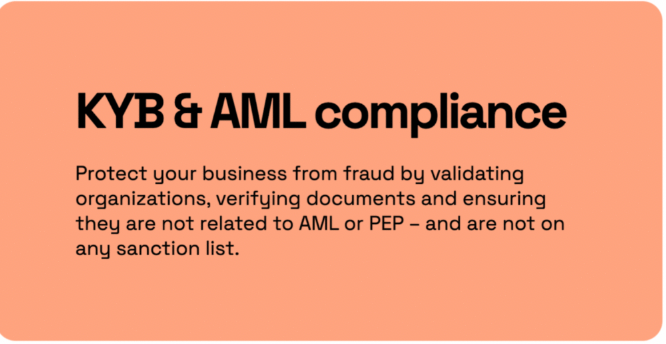
Stage 2: Identity Verification (KYC)
Before any credit assessment can take place, the borrower’s identity must be confirmed. Know Your Customer checks are a regulatory requirement in most markets, covering document verification, address confirmation, and sanctions and PEP screening.
Lenders who run KYC as a separate, manual process — outside their origination workflow — add days to their cycle time and create a handoff risk between stages. Integrating KYC directly into the application flow, so that checks run automatically on submission, removes this bottleneck entirely. This is one of the highest-impact areas for loan automation in origination.
Stage 3: Credit Assessment
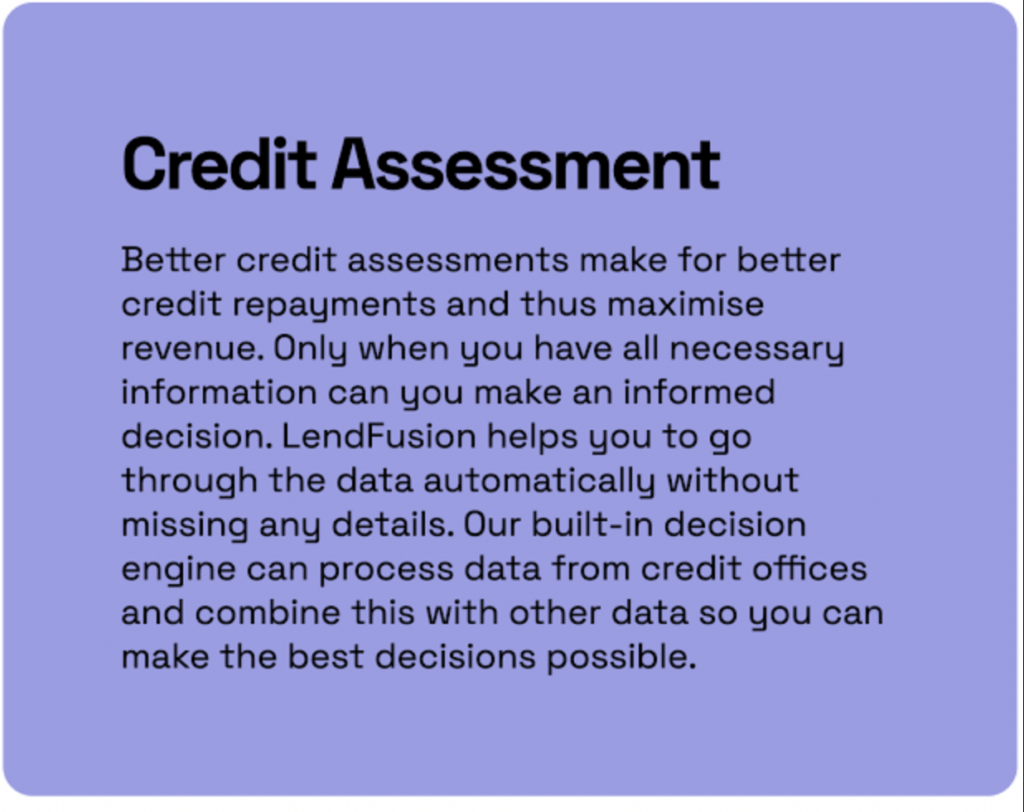
With identity confirmed, the lender now assesses the borrower’s creditworthiness. This draws on multiple data sources: credit bureau reports, open banking data for real-time income and expenditure analysis, internal scoring models, and affordability calculations.
The goal is to answer two questions: can this borrower repay, and will they? The first is an affordability question — income versus commitments. The second is a behavioral question — what does their credit history suggest about their repayment intent? A thorough loan risk assessment combines both, rather than relying on a single bureau score as a proxy for the whole picture.
Stage 4: Credit Decisioning
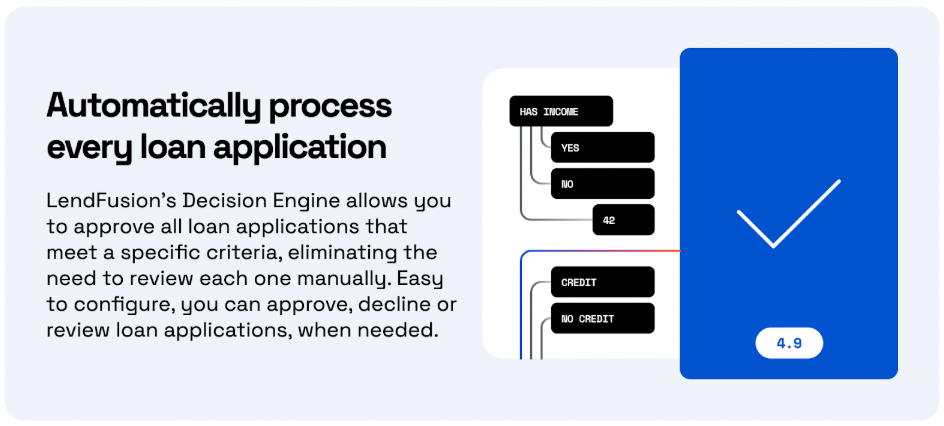
The credit assessment feeds into a decision: approve, decline, or refer for manual review. In a manual underwriting process, an underwriter reviews the assessment and applies their judgment. In an automated process, a credit decision engine applies your configured rules and returns an instant outcome.
The quality of decisioning is the single biggest driver of portfolio performance over time. Consistent, rules-based decisions produce predictable credit outcomes. Inconsistent, judgment-heavy decisions produce variable ones. Underwriting automation does not remove underwriter judgment — it applies it consistently to every application, at any volume, without degradation.
Stage 5: Offer Generation and Communication
For approved applications, a loan offer is generated — setting out the approved amount, interest rate, repayment schedule, and applicable terms. How quickly and clearly this offer reaches the borrower has a direct impact on conversion. A borrower who waits 24 hours for an offer after an instant approval has had time to apply elsewhere.
Automated offer generation — triggered immediately on approval, delivered by email or SMS, with a tracked link for acceptance — closes the gap between decision and commitment. Loan document management integrated with the origination workflow means the offer document is generated from the loan data, not assembled manually from a template.
Stage 6: Agreement and E-Signature
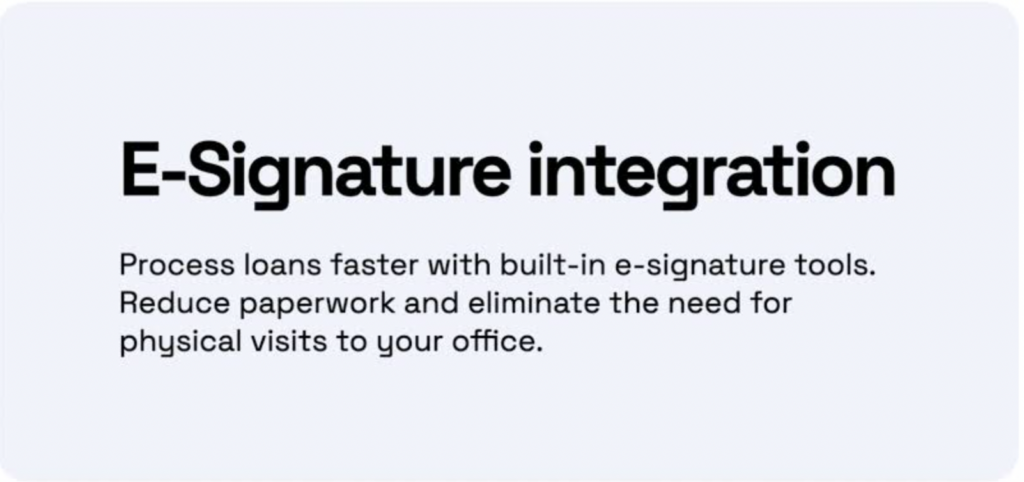
Once the borrower accepts the offer, the formal loan agreement is generated and sent for signature. E-signature capabilities embedded in the origination workflow remove the need for physical documents, accelerating this stage from days to minutes in most cases.
The signed agreement is the legal foundation for the loan. Everything downstream — disbursement, repayment collection, collections enforcement — depends on it being correctly executed. A loan audit trail that records when the agreement was sent, opened, and signed provides the compliance record that regulated lenders need.
Stage 7: Disbursement
With a signed agreement in place and all pre-conditions met, funds are transferred to the borrower. Loan disbursement is the final step in origination and the first moment when real money moves. The speed and reliability of this step determines whether the borrower’s experience of the whole process ends positively or in frustration.
Automated disbursement — triggered by the signed agreement, connected directly to the payment provider, with the loan record updated in real time — removes the manual bank transfer step that slows most lenders down. The loan transitions immediately to servicing: the repayment schedule is activated and the borrower receives a confirmation automatically.
Manual vs. Automated Origination: The Operational Difference
The gap between a manual and an automated origination process is not incremental — it is structural. Here is how the two approaches compare at each stage:
The time-to-fund difference — days versus hours — is the most visible impact. But the less visible cost is equally significant. Every manual handoff in the origination process is a point of delay, error risk, and potential borrower dropout.
Where Lenders Lose Time in Origination
The bottlenecks in loan origination are remarkably consistent across lenders of different sizes and product types. The most common:
Chasing missing documentation
An application submitted without required documents stalls until the gap is filled. Automated document checklists — served to the borrower at point of application, with reminders triggered if items are outstanding — eliminate most of this delay. The consumer lending process guide covers how lenders build this into their borrower communication flow.
Sequential rather than parallel checks
Manual origination processes typically run checks in sequence: KYC first, then bureau pull, then affordability. An automated loan management workflow runs them in parallel — all external data requests fired simultaneously, results assembled into a single decision input. The time saving is significant: a process that takes 48 hours sequentially can take under 60 seconds in parallel.
Manual offer and agreement handling
Every minute between approval and offer delivery is an opportunity for the borrower to look elsewhere. Automated offer generation and e-signature delivery closes this window immediately. Lenders still managing this by email and PDF attachment are losing deals not at the decision stage but in the gap between decision and commitment.
Disconnected systems requiring re-entry
When origination and servicing sit in different systems, loan data must be re-entered at the handoff point. This is a source of errors, reconciliation problems, and administrative overhead. A loan management platform that handles origination through to servicing in one system eliminates this entirely — the loan record created in origination becomes the servicing record without any manual transfer.
Common Origination Mistakes and What They Cost
How Origination Feeds Portfolio Quality
The origination process is where portfolio quality is determined, not where it is discovered. By the time a loan enters arrears or defaults, the credit decision that created it was made weeks or months earlier. If the decision was based on inconsistent criteria, incomplete data, or a process that varied by underwriter, the portfolio will reflect that variability in its default rates.
This is why portfolio management and origination are so closely connected. Lenders who run loan portfolio analysis regularly — tracking performance by origination cohort, channel, and product — can identify when their origination process has produced a bad vintage before it shows up in aggregate NPL figures. That early warning is only possible if the origination data is clean, structured, and consistently captured from the first application.
A modern loan management system captures origination data in a structured format from day one — making it available for portfolio analysis, regulatory reporting, and model development as the book grows. Lenders who start on manual processes and migrate later are often working from incomplete historical data when they try to build credit models. Starting on the right infrastructure compounds in analytical value over time.
Origination for Different Loan Products
The origination process varies significantly across loan product types. The core stages are consistent, but the data inputs, decision criteria, and timing expectations differ:
Consumer loans
Speed and borrower experience are the primary competitive variables. Borrowers expect instant or same-day decisions, digital self-service, and immediate confirmation. The origination process should be fully automated for clean cases, with a manual referral path for edge cases only.
Bridge loans
Collateral assessment is central — LTV calculations, property valuations, and legal checks are part of the origination process in ways that are not relevant in consumer lending. Bridge loan automation has transformed how fast specialist lenders can complete origination, but the process retains more human touchpoints than consumer lending.
Business loans
Origination for business loans typically requires more documentation — management accounts, director information, business plans — and may involve staged approval with credit committee sign-off. Automated workflows that manage document collection and approval routing reduce the cycle time significantly even where the decision itself involves human judgment.
BNPL and embedded lending
Origination must be near-instant and invisible to the borrower — completed within a checkout flow in seconds. The credit decision engine operates without any manual step, drawing on limited data inputs to make a fast, low-value decision. The origination process is optimised entirely for conversion speed rather than thoroughness.
What to Look for in Loan Origination Software
Not all loan origination platforms are created equal. When evaluating options, the criteria that matter most for a growing lender:
- End-to-end coverage — does it handle the full origination flow from application through to disbursement trigger, or is it a point solution for one stage?
- Native decision engine — rules-based credit decisioning built in, not integrated from outside
- Data integrations — bureau, open banking, and identity verification connected out of the box, not requiring custom builds
- No-code configuration — the ability to change loan products, decision rules, and document templates without developer involvement
- E-signature built in — not managed through a separate tool requiring manual handoffs
- Audit trail — every origination event logged automatically for compliance and dispute management
- Connected to servicing — loan data created in origination flows directly into the servicing record without re-entry
The last point is the one most often overlooked. Origination software that does not connect to the servicing system creates a data handoff problem that persists for the life of every loan originated. A loan management platform that covers both origination and servicing in one system is the only architecture that eliminates this problem entirely.
A Fast, Clean Origination Process Is a Competitive Advantage
Loan origination is where lending businesses win or lose deals — before a single repayment has been made. A process that is slow, manual, or inconsistent loses borrowers at every stage: at application, at the decision, at offer delivery, and at the agreement. A process that is fast, automated, and consistent converts more applicants and starts every loan with clean, structured data.
The lenders growing fastest have treated origination as a product, not just a process — designing it for borrower experience as much as for credit quality, and investing in the automation that makes both possible at scale. The operational foundations of a scalable lending business almost always start here.
Automate your Origination Process End to End
LendFusion handles the full loan origination flow in one platform — digital application, automated KYC, rules-based decisioning, e-signature, and disbursement trigger — with no manual handoffs between stages. Go live in weeks, not months.
Book your free demo at lendfusion.com/demo


Vahuri Voolaid, COO
Vahuri is the Chief Operations Officer at LendFusion. Vahuri has 10 years of experience in fintech with loan management software as a product owner and an MBA with a specialisation in IT management.
Connect with Vahuri on LinkedIn.