Loan Management for Private Lenders: How to Run a Lending Business Without the Admin

TLDR Most private lenders start on spreadsheets. They work fine for the first few loans — and become a serious operational problem by the time you have 20 or 30. This guide covers what loan management actually involves for a private lender, where spreadsheets break down, what to look for in a platform, and how to make the switch without disrupting your existing book.
If you are a private lender, you probably started the same way most do: a spreadsheet with a tab per borrower, columns for loan amount, interest rate, repayment dates, and a running balance. Maybe a calendar reminder to chase the ones who go quiet.
It works. Until it does not.
The moment you have more than a handful of active loans, the spreadsheet starts fighting you. Payments come in on different dates. One borrower wants to restructure.
Another is late and you are not sure by how much because the formula broke when you added a new row. You spend an afternoon rebuilding it — and that is an afternoon you were not spending on finding the next loan. Sound familiar? It is exactly what 7 ways manual loan processes limit business growth documents in detail.
This is the private lender’s operational problem. Not credit risk, not capital — admin. The loan management work that sits behind every active loan: tracking repayments, chasing arrears, producing statements, maintaining records. At small scale it is manageable. At larger scale it becomes the ceiling on how big you can grow.
The solution is not to hire someone to manage the spreadsheets. It is to replace them with a loan management system — software that handles the operational side of lending automatically, so you can focus on the business. The 4 key challenges in loan management that hold most private lenders back all have the same root cause: doing manually what software should handle.
The Spreadsheet Problem: Where It Breaks Down
Spreadsheets are not the wrong tool because they are unsophisticated. They are the wrong tool because they require you to do manually what software should do automatically. Here is where the friction shows up — and where moving from Excel to a loan management system pays the most immediate dividends:
Repayment tracking becomes a full-time job
With five loans, tracking repayments in a spreadsheet is straightforward. With 25, you are reconciling bank statements against a spreadsheet every week, updating balances by hand, and hoping no formula has drifted.
With 50, it is consuming a day or more every month just to know where you stand. Loan repayment tracking should be automatic — not a manual reconciliation exercise. The hidden cost of manual loan servicing is measured in days per month for most private lenders operating on spreadsheets.
Missed payments slip through
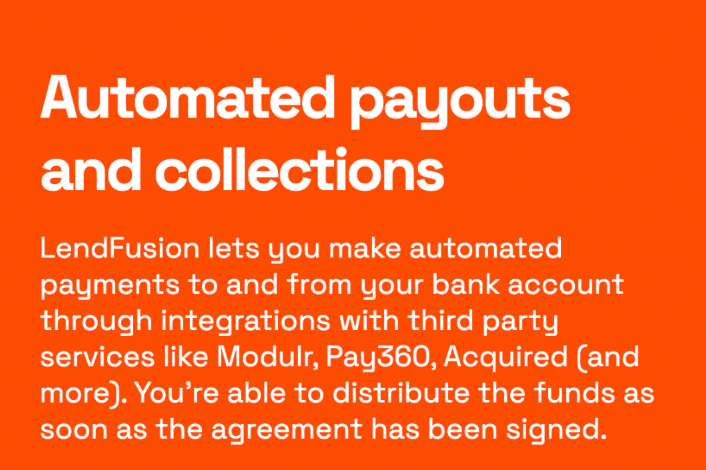
A spreadsheet does not know when a payment was due and did not arrive. You have to check. And if you are managing multiple loans with different payment dates, some will inevitably get missed — not because the borrower did not pay, but because you did not notice. Every day a missed payment goes unchased is a day the problem is harder to resolve. Automated loan communication and notifications are what catch these the moment they happen, not days later.
Borrower queries eat time
“What is my current balance?” “How much interest have I paid?” “Can I get a statement for my accountant?” These are reasonable questions that take five minutes each to answer when you have to go and look them up manually. At 30 borrowers, that is 150 minutes of admin from questions alone.
A loan management platform with a borrower self-service portal means they can answer those questions themselves — without contacting you at all.
There is no audit trail
If a borrower disputes a payment, or a regulator asks to see your records, or you need to show an investor the state of the book — what do you have?
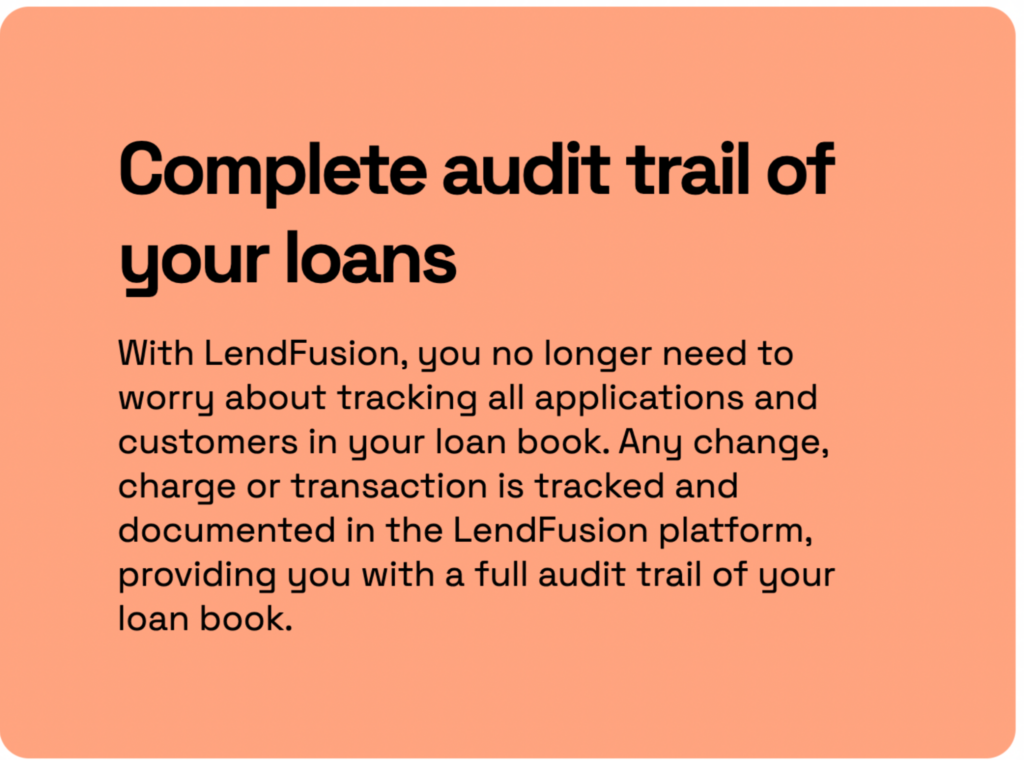
A spreadsheet is not an audit trail. It does not record who changed what and when. It cannot demonstrate that your records are accurate and unaltered. A proper loan audit trail is automatic in good loan management software — and essential the moment you are lending at any meaningful scale. Loan compliance depends on it.
Scaling up means errors multiply
Every new loan added to a spreadsheet is another opportunity for a formula error, a mislinked cell, or a copy-paste mistake to corrupt the whole model.
When you want to handle increased loan volumes without increasing staff, a spreadsheet is the exact wrong tool — it scales linearly with effort and non-linearly with error risk. One bad formula in a repayment schedule means a borrower is being under- or over-charged, and you might not notice for months.
What Good Loan Management Looks Like for a Private Lender
The goal is not complexity — it is the opposite. Good loan management for a private lender means the operational side of lending largely runs itself, so your attention goes to decisions and relationships rather than admin. The 5 pillars every lender needs apply just as much to a private lender with 30 loans as to a platform with 30,000.
In practice, that means:
- Every loan is tracked automatically — balance, accrued interest, next payment date, payment history — without you maintaining it manually. Good loan tracking software does this in real time
- Repayments are collected automatically on the due date, with immediate alerts if a payment fails
- Missed payments trigger a structured debt collection workflow — a reminder on day one, an escalation on day seven — without you having to initiate it
- Borrowers can see their own account, download statements, and answer their own questions without contacting you — reducing the manual servicing burden on your side
- Your portfolio is visible in one loan portfolio management dashboard — total book size, active loans, arrears, upcoming maturities — updated in real time
- Every action is logged automatically in a complete audit trail, giving you a record you can produce for investors, regulators, or your own review at any time
None of this is complex. It is the baseline that a good loan management platform delivers — and the difference between a lending business that can scale and one that is permanently constrained by its own admin.
Spreadsheets vs. Loan Management Software
The comparison above is not about sophistication — it is about time. Every row in the left column is time you are spending on administration that software should be handling. The case for moving from Excel to a loan management system is ultimately a case for getting that time back — and redirecting it towards growing your loan volume instead.
What to Look for in Loan Management Software for Private Lenders
Not every loan management platform is built for a private lender. Many are designed for large banks or high-volume consumer lenders with IT teams and implementation budgets. The 10 best loan management software platforms guide compares the full market — but here is what actually matters for a private lending operation specifically:
The last point — no-code setup — is worth emphasising. If a platform requires developer involvement to configure your loan products or change your interest calculations, it is not the right fit for a lean private lending operation.
You should be able to set it up, adjust it, and expand it yourself. That is what LendFusion is built to deliver — and what separates it from the enterprise loan management systems designed for banks with IT departments.
Do I Need to Be Technical to Use Loan Management Software?
No. This is the question most private lenders ask — and the honest answer is that the right platform requires no technical knowledge to set up or operate. This is what makes modern loan management software fundamentally different from the enterprise systems of a decade ago.
You do not need to write code, connect APIs, or understand databases. You configure your loan products through an interface — interest rate, repayment schedule, fee structure — and the platform handles everything from there. The 5 loan management software best practices that matter most for private lenders are all achievable without technical involvement.
The distinction to watch for when evaluating platforms: some are genuinely no-code and designed for non-technical operators. Others are marketed as easy to use but require IT involvement for anything beyond the basics.
Ask directly: can I set up a new loan product without a developer? Can I change my interest calculation without contacting support? Look at loan management software training mistakes to understand what complexity looks like in practice — and what to avoid.
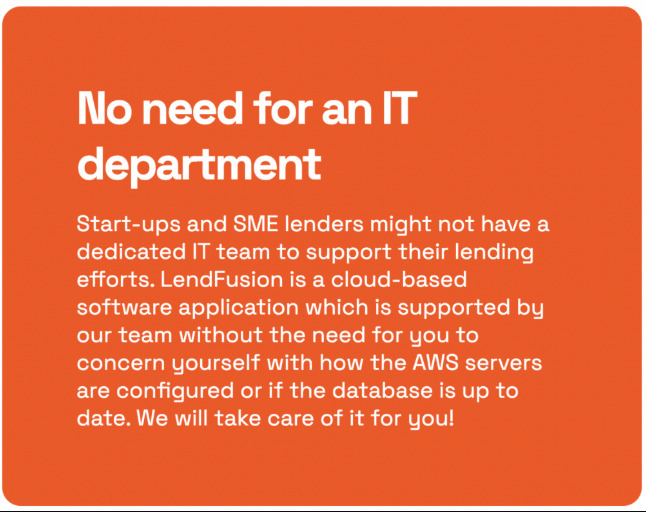
LendFusion was built specifically for lending businesses that want to operate without an IT team. The same-afternoon setup promise reflects the reality that the platform is configured through an interface, not an engineering project — which is exactly what a private lender needs.
How to Make the Switch Without Disrupting Your Existing Book
The most common reason private lenders delay moving off spreadsheets is the migration question: what happens to all my existing loans? The answer is more straightforward than most people expect. The guide on how to switch lending platforms without disruption covers the full process — but here is the core of it for a private lender:
Step 1: Export your current loan data
Start with a clean export from your spreadsheet — one row per loan, with the core fields: borrower details, loan amount, interest rate, start date, repayment schedule, and current balance. Focus on loan document management as part of this process — gathering agreements and correspondence into a single folder before migration saves time later.
Step 2: Configure your loan products
Before importing loans, set up your loan product types in the platform — your standard terms, interest structures, and fee configurations. This is where loan management software workflows are defined: how applications flow, how repayments are triggered, how arrears are escalated. In LendFusion, this setup takes hours, not days.
Step 3: Import existing loans
Most platforms — including LendFusion — support importing existing loans directly, so your active book moves across cleanly. Repayment schedules are recalculated, balances are set correctly, and from that point the platform handles all loan repayment tracking automatically going forward.
Step 4: Connect payment collection
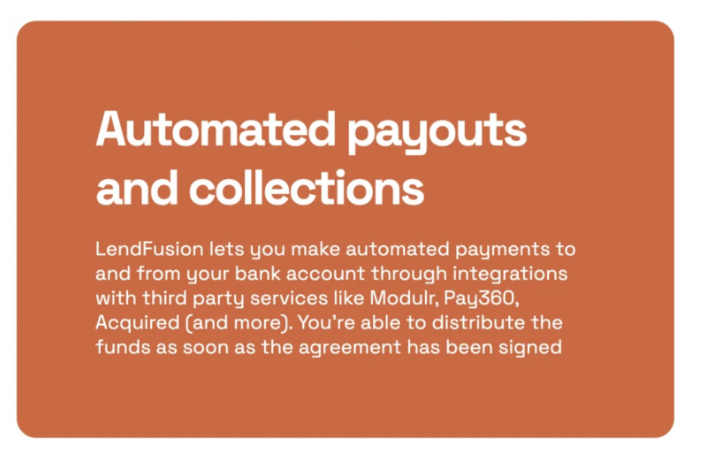
Connect your payment provider — GoCardless for direct debit, Stripe for card payments — and repayment collection becomes automatic from the next due date. Loan automation at the payment stage is where most private lenders feel the biggest immediate relief: no more manual bank transfers, no more reconciliation, no more chasing what should have been automatic.
Step 5: Retire the spreadsheet
Once your loans are in the platform and repayments are running automatically, the spreadsheet has no role. The loan portfolio management dashboard gives you everything it was giving you — and more, in real time, without maintenance. Your loan risk assessment is also on firmer ground once it is based on clean, structured data rather than a spreadsheet you are not entirely sure is correct.
When Does a Private Lender Need Loan Management Software?
The honest answer is: earlier than most private lenders make the switch. The common trigger is a specific pain event — a missed payment caught late, a borrower dispute with no paper trail, a spreadsheet error that took days to find. But by then, the cost is already real. The benefits of loan management software compound from the first loan, not just when you feel the pain acutely.
The cleaner answer is: when any of the following are true:
- You have more than 10 active loans and repayment tracking is taking more than an hour a week
- You have had at least one missed payment that you caught late — a sign your loan communication and notification setup is not working
- A borrower has asked for a statement and it took more than 30 minutes to produce
- You are planning to grow the loan volume and you can see the spreadsheet will not handle it
- You want to bring in an investor and need to show them a clean portfolio view backed by a proper audit trail
If any of those are true, the switch is overdue. The cost of staying on spreadsheets — in time, in errors, in missed payments, and in growth you are not achieving — compounds every month you wait. And the operational foundations of a scalable lending business all start with getting off manual processes.
The Bottom Line
Private lending is a people business — built on relationships, judgment, and trust. The operational side should not be getting in the way of that. When you are spending meaningful time on repayment tracking, statement production, and spreadsheet maintenance, that is time you are not spending on borrowers, on deal flow, or on growing the book.
The right loan management software does not change how you lend. It changes how much time you spend on the paperwork behind it. A platform that requires no technical team to run, handles automated collections, maintains a full compliance and audit record, and goes live in days rather than months — removes the admin ceiling so the business can grow at the pace you want.
That is what LendFusion is built for. Not for banks with IT departments. For private lenders who want to run a professional, scalable lending business without the complexity that usually comes with it. See what LendFusion is and how it works — then book a demo and see it for yourself.
Ready to run your lending business without the spreadsheets?
LendFusion is built for private lenders who want a professional, scalable loan management operation — without an IT team, without months of implementation, and without the complexity of enterprise software. Go live the same day.
Book your free demo at lendfusion.com/demo


Andres Valdmann, CEO
Andres is the Chief Executive Officer at LendFusion. Andres has 15 years of experience in fintech and loan management software and has a proven track record in helping companies hit their growth goals.
Connect with Andres on LinkedIn.