10 Must-Have Features of Modern Cloud-Based Loan Origination Software
Choosing the right loan origination software (LOS) is no longer just an IT decision – it’s an operational one. As borrowers expect decisions in hours and regulators demand tighter oversight, lenders need systems built for speed, accuracy, and scalability.
Cloud-based LOS platforms now lead the industry because they streamline the entire lending lifecycle while eliminating manual bottlenecks.
Below are the 10 essential features lenders should look for in a modern cloud-based loan origination system – especially if you’re managing high volumes or specialist lending products.
1. End-to-End Workflow Automation
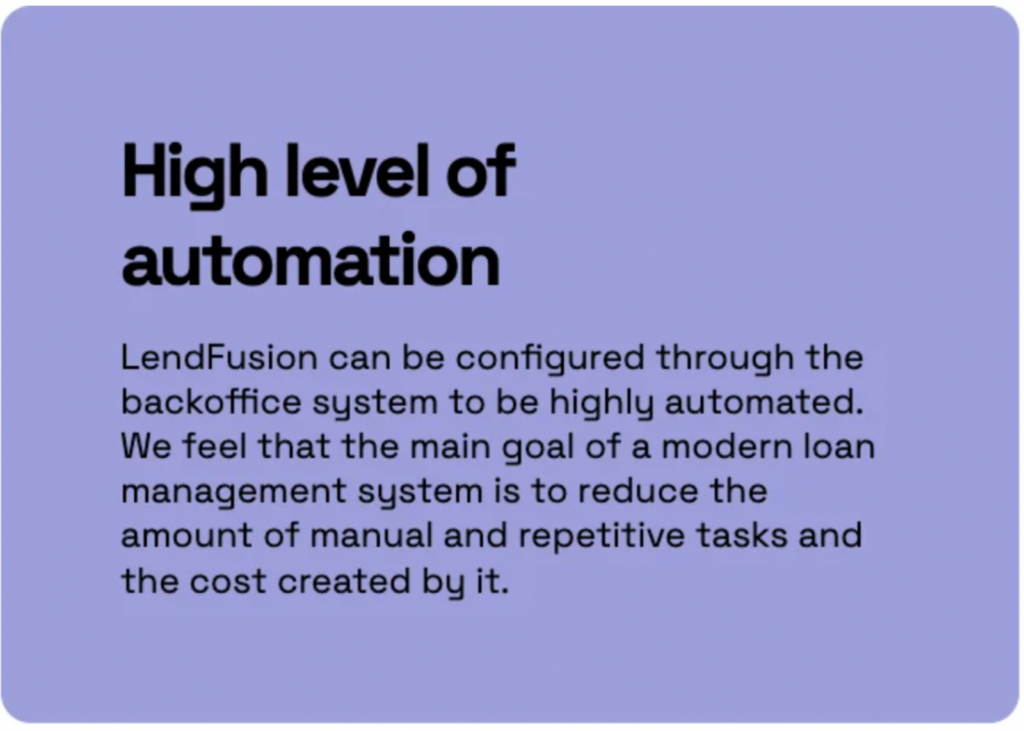
Modern lending only moves as fast as its workflows.
End-to-end automation ensures every step – from application intake to underwriting to decisioning – happens with minimal manual touchpoints. A strong LOS doesn’t just automate tasks; it orchestrates them intelligently so nothing stalls.
Automation reduces time-to-decision, eliminates repetitive work, and ensures processes stay consistent regardless of volume or staffing.
Look for:
- Automated document collection and verification
- Rules-based task routing
- Exception alerts and approvals
- Event-based triggers (e.g., auto-email on missing documents)
End-to-end automation is what turns a slow, fragmented process into a single continuous flow.
2. Real-Time Decisioning Capabilities
Borrowers want decisions in minutes – not days.
Yet, it takes lenders 3+ days on average to make a decision.
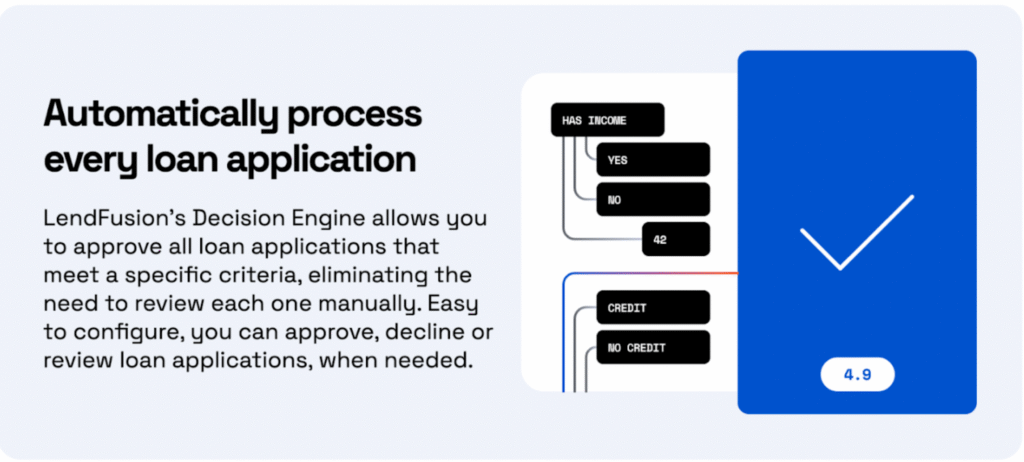
A modern LOS must support rapid decisioning through configurable rules, instant credit checks, and dynamic scoring models.
Real-time decision capabilities allow lenders to classify applications instantly, accelerate approvals for low-risk cases, and route complex applications straight to expert underwriters without delay.
Look for:
- Auto-scoring and risk segmentation
- Instant credit bureau calls
- Dynamic rule engines
- Conditional approval logic
Real-time decisioning lets lenders keep pace with borrower expectations while maintaining robust risk controls.
3. Integrated KYC, AML & Compliance Checks
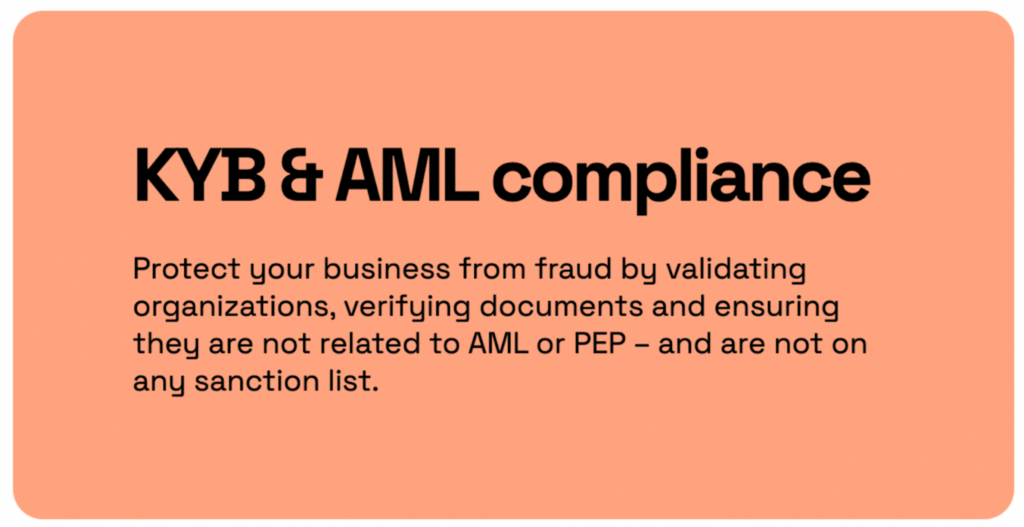
Compliance is often the slowest and most manual part of loan origination – and one of the easiest to modernize. Integrated compliance ensures all checks happen inside the workflow, not as separate processes that require handoffs or email-based reviews.
By embedding KYC, AML, and fraud checks directly within the LOS, lenders can reduce risk, maintain audit accuracy, and eliminate costly delays.
Look for:
- Automated identity verification
- AML watchlist checks
- Address and document verification tools
- Full audit trails and compliance logs
Integrated compliance creates a faster, safer, and more consistent lending environment.
4. Customizable Workflows & Rules
Every lender is different – especially specialist and high-volume lenders with unique underwriting practices or niche product structures.
A modern LOS must allow full configuration without requiring developers or expensive custom builds.
This includes everything from workflow order to decision rules to document requirements.
Look for:
- Drag-and-drop workflow configuration
- Product-specific logic
- Adjustable approval hierarchies
- Rule-based exceptions and overrides
Customizability ensures the system adapts to your lending model, not the other way around.
5. Unified Data Across the Loan Lifecycle
Data fragmentation is one of the biggest operational risks in lending.
When borrower information, documents, underwriting notes, and compliance data live in separate systems, decisioning slows and mistakes multiply. A cloud LOS must centralize everything in one place, ensuring teams always work with the same information.
Look for:
- Single record for each borrower
- Unified application and underwriting history
- Automatic syncing across modules
- Secure document repositories
Unified data improves speed, accuracy, and auditability – the foundation of modern lending.
6. Seamless Integrations Through APIs
Modern lending relies on dozens of systems – credit bureaus, open banking, CRM, payment gateways, analytics tools, and more.
A cloud LOS must integrate easily with existing tools and allow new connections without lengthy IT projects. Open APIs make this possible, creating a flexible ecosystem that grows with the lender.
Look for:
- Pre-built integrations with major providers
- Open REST APIs
- Webhooks for real-time updates
- Low/no-code integration tools
A connected LOS eliminates data silos and streamlines every operational touchpoint.
7. Role-Based Permissions & User Management
Security and compliance depend on controlling who sees what. A strong LOS includes granular role-based access controls (RBAC) so lenders can protect sensitive data, satisfy regulatory expectations, and reduce operational risk.
Every action should be tracked and associated with a specific user.
Look for:
- Custom access profiles
- Permission-based data visibility
- Activity logs and timestamps
- Multi-factor authentication
RBAC ensures safe, auditable lending practices across all teams and workflows.
8. Digital Document Management
Documents are the heartbeat of underwriting – and one of the biggest sources of delay.
A cloud-based LOS must offer seamless digital document management to eliminate lost emails, manual uploads, and versioning issues. With automated collection, e-signatures, and templated document generation, lenders can dramatically accelerate application completion.
Look for:
- E-signature support
- Automated document requests
- Template-driven generation
- Secure upload portals
Strong document management removes one of the most time-consuming pain points in lending.
9. Real-Time Reporting & Analytics
Fast lending requires fast insight. A modern LOS should offer real-time dashboards that surface bottlenecks, track performance, and highlight trends across the lending lifecycle.
With accurate data at their fingertips, lenders can optimise processes, refine underwriting, and ensure compliance.
Look for:
- Pipeline visibility
- Time-to-decision metrics
- Portfolio performance analytics
- Underwriter workload dashboards
Real-time analytics turn data into action – and action into better decisions.
10. Scalability & High-Volume Performance
As lenders grow, systems must grow with them.
Cloud-native platforms excel here because they scale automatically, handle peak loads, and support multiple product lines without re-architecture. High-volume lenders especially need systems built for speed and reliability even under heavy demand.
Look for:
- Auto-scaling cloud infrastructure
- High availability SLAs
- Multi-product support
- Performance stability under load
Scalability protects long-term growth without adding operational constraints.
Feature Breakdown: What Each Capability Does — and Why It Matters
To make evaluation easier, here’s a clear breakdown of the core LOS features, what each one actually does, and why it matters for modern lending operations
| Feature | What It Does | Why It Matters |
|---|---|---|
| End-to-End Automation | Automates the full lending workflow | Reduces manual work and speeds up decision times |
| Real-Time Decisioning | Delivers instant scoring and approvals | Meets borrower expectations for fast responses |
| Integrated Compliance | Runs KYC/AML inside the workflow | Reduces delays and strengthens oversight |
| Customizable Workflows | Adapts processes to your lending model | Supports specialist, complex, or niche products |
| Unified Data | Centralizes all borrower and loan info | Improves accuracy and eliminates data silos |
| API Integrations | Connects LOS with other systems | Enables a flexible, scalable tech stack |
| Role-Based Permissions | Controls access and visibility | Enhances data security and auditability |
| Digital Document Tools | Automates collection and signatures | Removes one of the biggest lending bottlenecks |
| Real-Time Reporting | Offers live dashboards and insights | Improves operational decision-making |
| Scalability | Handles growth and high volumes | Ensures performance doesn’t decline over time |
Together, these capabilities form the foundation of a loan origination system that can support faster decisions, stronger compliance, and scalable growth.
Conclusion
Cloud-based loan origination software is now the backbone of modern lending.
But not every LOS can meet today’s expectations for speed, compliance, and scalability.
By prioritizing the ten features above, lenders can dramatically reduce decision times, eliminate operational bottlenecks, and create a more connected, predictable, and scalable lending operation.
These capabilities aren’t “nice to have” – they’re the new standard for high-performing lending teams in 2026.
Want to modernize your loan origination process? Book a personalized demo and see how LendFusion helps lenders deliver faster, more connected lending at scale.

Andres Valdmann, CEO
Andres is the Chief Executive Officer at LendFusion. Andres has 15 years of experience in fintech and loan management software and has a proven track record in helping companies hit their growth goals.
Connect with Andres on LinkedIn.