How to Scale a Lending Business: The Operational Playbook

TLDR Scaling a lending business is not just about issuing more loans. It is about building operations that handle more volume without proportionally more headcount, more risk, or more complexity.
Most lending businesses start the same way. A founder or a team identifies an underserved borrower segment, raises initial capital, builds a product, and starts issuing loans. The first loans are exciting. The first hundred feel like proof. The first thousand start revealing something else entirely: the cracks in the operation.
Scaling a lending business is harder than scaling most other businesses, for a simple reason. Every loan on your book is a live financial commitment — one that has to be monitored, collected, and managed regardless of what else is happening in the business.
The more loans you issue, the more operational weight you are carrying. And if your operations are not built to handle that weight, volume becomes a liability rather than an asset.
The lenders who scale successfully are not necessarily the ones with the best product or the most capital. They are the ones who build operational foundations that handle more volume without breaking — and who recognise the bottlenecks before they hit them rather than after.
This is the playbook we have developed working with alternative lenders across Europe and beyond — from lenders writing their first hundred loans to those managing portfolios of 100 million euros and beyond.
The Four Stages of Lending Scale
Every lending business moves through recognisable stages as it grows. The challenges are different at each stage — and so are the solutions. Understanding where you are is the starting point for knowing what to fix.
Stage 1: Foundation
0–500 loans. Proving the model works.
At this stage, the priority is validating your credit model, not optimising your operations. Manual processes are acceptable — even appropriate — because volume is low enough that the friction is manageable and the learning from hands-on involvement is valuable. The risks at this stage are credit risk (is your underwriting producing the outcomes you expected?) and product risk (are borrowers using the product the way you intended?).
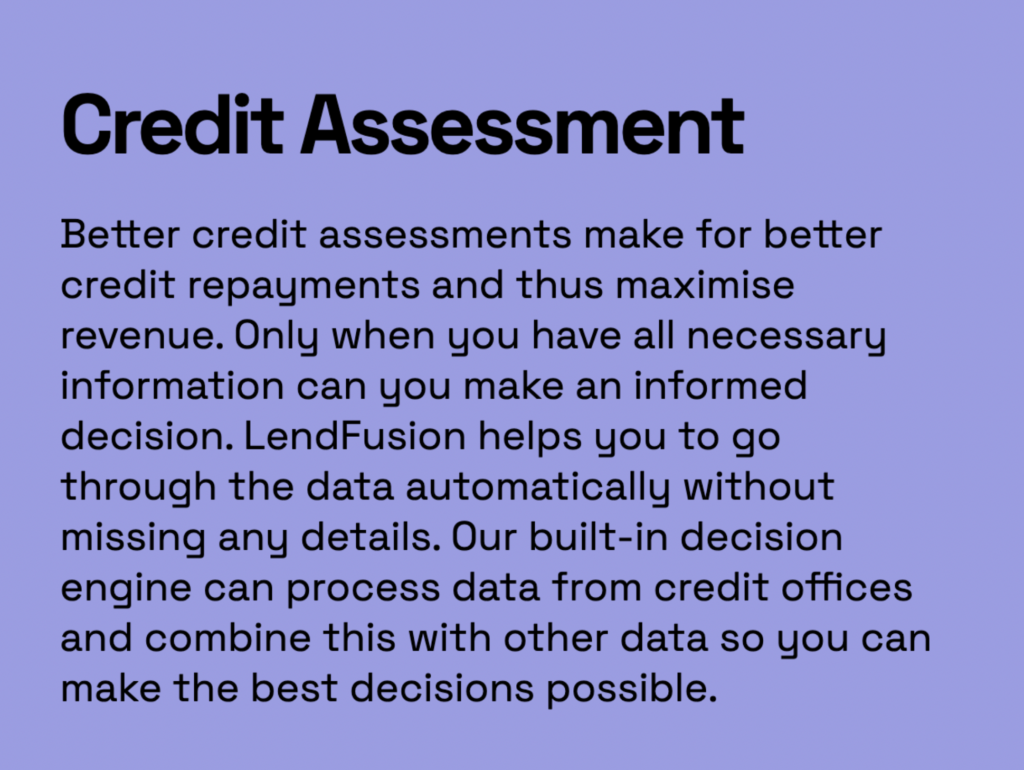
The infrastructure choice that matters most here is not efficiency — it is data quality. The loan management system you choose at this stage determines the quality of historical data you accumulate. That data becomes the foundation for everything that follows: credit model refinement, portfolio analysis, regulatory reporting. Choose a platform that captures structured data from loan one.
Stage 2: Traction
500–5,000 loans. Operations start to strain.
This is where most lending businesses hit their first scaling wall. Volume has grown enough that manual processes are visibly slowing things down — but not so much that it feels urgent to fix. Applications take longer to process. The team is spending more time on admin. Portfolio management is happening in spreadsheets that are getting harder to maintain. Arrears are being managed reactively.
The instinct at this stage is to hire. That is the wrong instinct. Hiring solves a capacity problem temporarily — and creates a cost structure that is hard to unwind. The right move is to automate the processes that are consuming time, so the existing team can handle more volume. Underwriting automation and loan automation across the servicing workflow are the highest-leverage interventions at this stage.
Stage 3: Scale
5,000–50,000 loans. The operation has to run itself.
At this stage, the lending operation needs to function as a system rather than a team of people making individual decisions. Origination is automated, servicing workflows are triggered by events rather than managed by hand, and the credit decision engine is handling thousands of applications consistently without underwriter involvement for clean cases.
The challenges that emerge at this stage are different. Portfolio concentration starts to matter — you may have grown quickly in one segment and not noticed until portfolio analysis reveals it. The cost of a bad rule in your decision engine compounds across thousands of decisions. Collections workflows that worked at small scale need to be more sophisticated to handle the volume and variety of arrears cases at large scale.
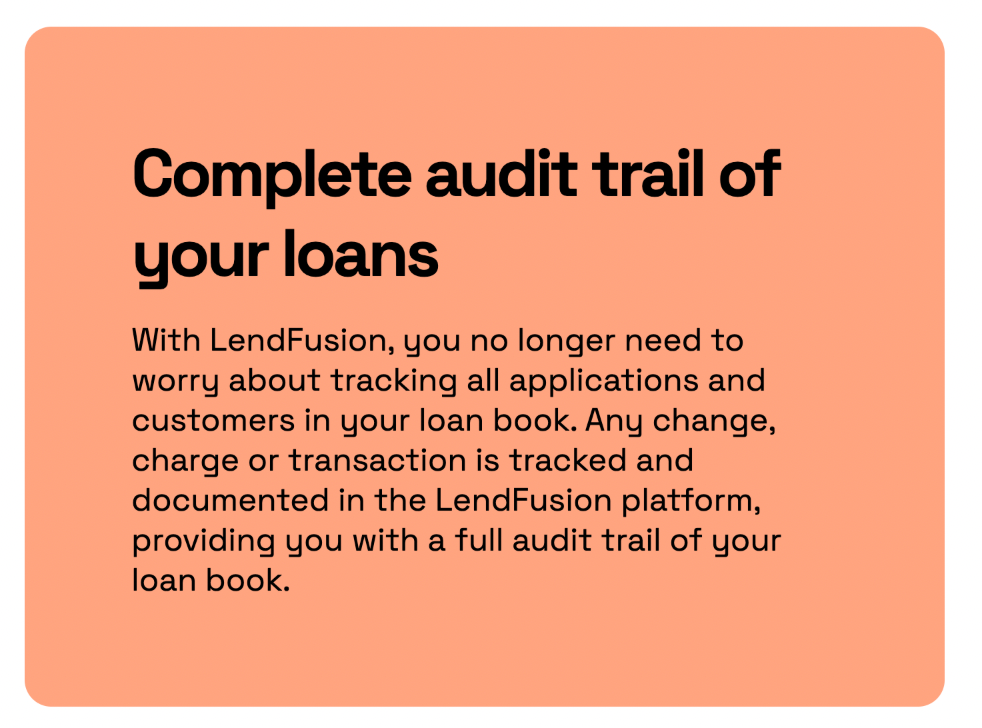
Regulatory scrutiny also increases with scale. The audit trail that was nice-to-have at Stage 1 becomes a non-negotiable at Stage 3. Reporting to investors and regulators needs to be accurate, timely, and producible without a week of manual effort.
Stage 4: Expansion
50,000+ loans or multiple markets. Growth across dimensions.
At the expansion stage, the lending business is growing in multiple dimensions simultaneously — new products, new geographies, new channels, new borrower segments. The operational challenge shifts from efficiency within a single product to consistency across multiple ones.
The infrastructure requirements are demanding: multi-product decisioning with different rule sets per product, multi-currency support for cross-border operations, portfolio reporting that consolidates across segments and geographies, and compliance tooling that handles multiple regulatory frameworks. This is the stage at which the choice of loan management platform made at Stage 1 either pays off or creates painful migration work.
The Six Bottlenecks That Prevent Lending Businesses From Scaling
Every lending business that stalls at a particular stage stalls for recognisable reasons. The following six bottlenecks account for the vast majority of scaling failures — not credit risk, not capital, but operational constraints that stop the machine from running faster.
| Bottleneck | What It Costs You | The Fix |
|---|---|---|
| Manual underwriting | Each application requires a person — volume is capped by headcount | Automated decision engine |
| Spreadsheet portfolio mgmt | No real-time visibility; analysis is always lagging | Loan management platform |
| Disconnected systems | Data siloed across tools; handoffs create delays and errors | End-to-end LMS |
| Manual collections | Chasing arrears reactively burns team time and worsens outcomes | Loan automation |
| Slow origination | Borrowers abandon long application flows; competitors win on speed | Reduce decision times |
| Poor portfolio visibility | Problems build undetected until they are expensive to fix | Portfolio analysis |
The pattern in the table above is consistent: the bottleneck is always a manual process that made sense at small scale and becomes a constraint at larger scale. The fix is always automation or better infrastructure — not more people.
The Five Operational Pillars of a Scalable Lending Business
Lending businesses that scale successfully tend to have built strength in five operational areas. These are not sequential — they develop in parallel — but neglecting any one of them creates a vulnerability that becomes more serious as volume grows.
1. Automated, consistent credit decisioning
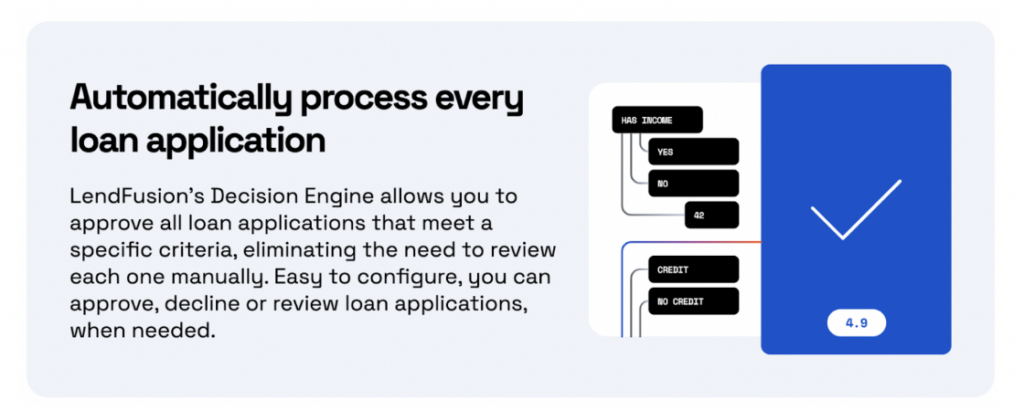
The credit decision engine is the heart of a scalable lending operation. It applies your lending criteria consistently to every application — whether you are processing 10 per day or 10,000. It integrates with credit bureaus, open banking APIs, and fraud providers to enrich decisions with real-time data. And it logs every decision with a complete audit trail that supports both internal analysis and regulatory review.
The key word is consistent. Manual underwriting introduces variability — different underwriters apply criteria differently, volume fluctuations create backlogs, and the decisions that get made at 4pm on a Friday are not always the same as the ones made at 10am on Monday. An automated decision engine makes the same decision on the same inputs every time. That consistency is what makes a credit model improvable over time — you can measure it, analyse it, and adjust it.
2. End-to-end workflow automation
Every manual handoff in a lending workflow is a point of friction, error risk, and delay. The loan lifecycle — from application through KYC, credit decision, offer, contract, disbursement, repayment, and collections — should be a connected sequence of automated steps, not a series of manual tasks triggered by people remembering to do things.
This is what loan management software workflows are designed to deliver: a system where an event at one stage automatically triggers the next, where borrowers receive communications without someone drafting them, where payments are collected without someone initiating transfers, and where arrears trigger a structured response rather than a reactive one.
3. Real-time portfolio visibility
A lending business that does not know the current state of its portfolio cannot manage it proactively. By the time a monthly report surfaces a deteriorating segment, the problem has been building for weeks. Real-time loan portfolio analysis — delinquency by segment, vintage performance, concentration by product and channel — gives lenders the visibility to act early rather than late.
This requires structured data from every stage of the loan lifecycle, captured automatically by the platform rather than manually by the team. It is one of the clearest areas where the choice of loan management software has a long-term compounding effect: platforms that capture richer, more structured data give lenders a significant analytical advantage as the portfolio grows.
4. Proactive collections
The difference between reactive and proactive collections is significant — in borrower outcomes, in recovery rates, and in the team time consumed. Reactive collections waits for a missed payment and then responds. Proactive collections uses predictive signals — changes in open banking data, shifts in repayment timing, early delinquency flags — to identify borrowers moving towards arrears before they actually miss a payment, and intervenes early.
At small scale, reactive collections is manageable. At large scale, it is a material cost. The transition to proactive collections — automated early warning, structured outreach workflows, self-service repayment tools — is one of the highest-ROI operational investments a scaling lender can make.
5. Compliance as infrastructure
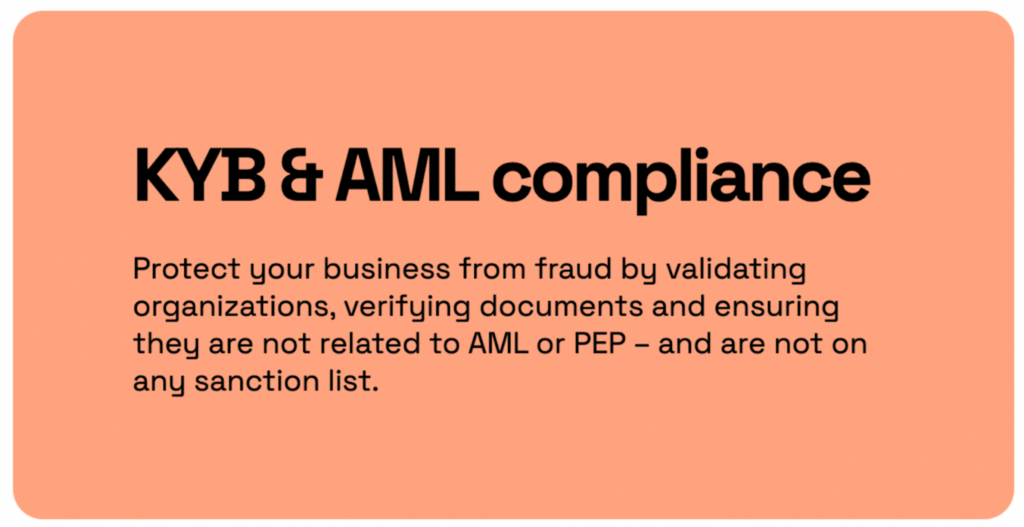
Compliance is not a department — it is a property of the operation. Lenders who treat compliance as infrastructure — building audit trails, maintaining documentation, configuring their decision engine to produce explainable outcomes — find that regulatory reviews are straightforward. Lenders who treat compliance as a reactive exercise find it expensive and distracting.
At scale, the cost of a compliance failure — remediation, regulatory action, reputational damage — is far higher than the cost of building it in from the start. The right loan management platform makes compliance a byproduct of normal operations, not an additional workload.
The Most Common Scaling Mistakes
Lenders who have been through the scaling journey — including many LendFusion customers — tend to identify the same mistakes in hindsight:
- Hiring to solve an automation problem — adding headcount to handle manual processes that should be automated. It works temporarily and creates a cost structure that is hard to unwind.
- Deferring the infrastructure decision — continuing to manage on spreadsheets or basic tools past the point where a proper platform is clearly needed. The migration becomes more complex and more expensive with every month of delay.
- Optimising for origination volume without managing portfolio quality — growing the book fast without maintaining visibility over how it is performing. The portfolio quality problems that result are discovered late and are expensive to fix.
- Building a standalone decision engine — investing in a separate decisioning tool that sits outside the loan management platform. The integration overhead and operational friction this creates is rarely worth the perceived benefit of best-of-breed.
- Launching a new product on the existing infrastructure before checking if it fits — consumer lending infrastructure does not automatically support bridge loans or invoice finance. Checking whether your platform supports the product type before launching saves painful rebuilds.
- Entering a new market before the first market is operationally stable — the complexity of multi-market operations compounds all existing inefficiencies. Stabilise the core operation before expanding.
The Infrastructure Decision: Why It Compounds
Of all the decisions a scaling lending business makes, the choice of loan management platform is the one with the longest time horizon and the highest switching cost. It is also the one that is most often made too quickly, too early, or with insufficient attention to what the business will need at three times its current size.
The questions to ask when evaluating a platform for scale:
- Can it handle multiple loan products with different rule sets — or does each product require a separate system?
- Does the decision engine sit natively inside the platform, or is it a third-party integration?
- Is portfolio reporting real-time and built-in, or does it require data export and manual construction?
- Can the origination and servicing workflow be configured without developer involvement when the business needs to change?
- Does it support multi-currency and multi-market operations — or is that a future rebuild?
- What does the implementation timeline look like — and how does it compare to competitors?
LendFusion was built specifically to answer yes to all of the above. It is used by lenders at every stage of scale — from those writing their first hundred loans to those managing portfolios of hundreds of millions. The platform that works at Stage 1 continues to work at Stage 4 — without the painful migrations that lenders on less scalable infrastructure inevitably face.
The Bottom Line
Scaling a lending business comes down to one discipline: building operations that handle more volume without proportionally more cost, risk, or complexity. That means automating the processes that consume team time, building visibility over the portfolio that surfaces problems early, and choosing infrastructure that grows with you rather than constraining you.
The lenders who get this right do not necessarily have the best product or the most capital. They have the most disciplined operations — and the infrastructure to run them. Every piece of the operational picture covered in this article — credit decisioning, workflow automation, portfolio analysis, proactive collections, and compliance infrastructure — is a choice. Make it early, and it compounds in your favour. Defer it, and it becomes a ceiling.
Ready to Scale Without the Operational Ceiling?
LendFusion is built for lending businesses that want to grow — handling origination, credit decisioning, servicing, collections, and portfolio reporting in one platform that scales from your first loan to your hundred-thousandth. Go live in weeks, not months.
Book your free demo at lendfusion.com/demo


Andres Valdmann, CEO
Andres is the Chief Executive Officer at LendFusion. Andres has 15 years of experience in fintech and loan management software and has a proven track record in helping companies hit their growth goals.
Connect with Andres on LinkedIn.